
Cultivating Connections
How the Vision for the Monroe Botanical Garden Began
by Melissa Burch, President
Every meaningful community project begins with a simple question.
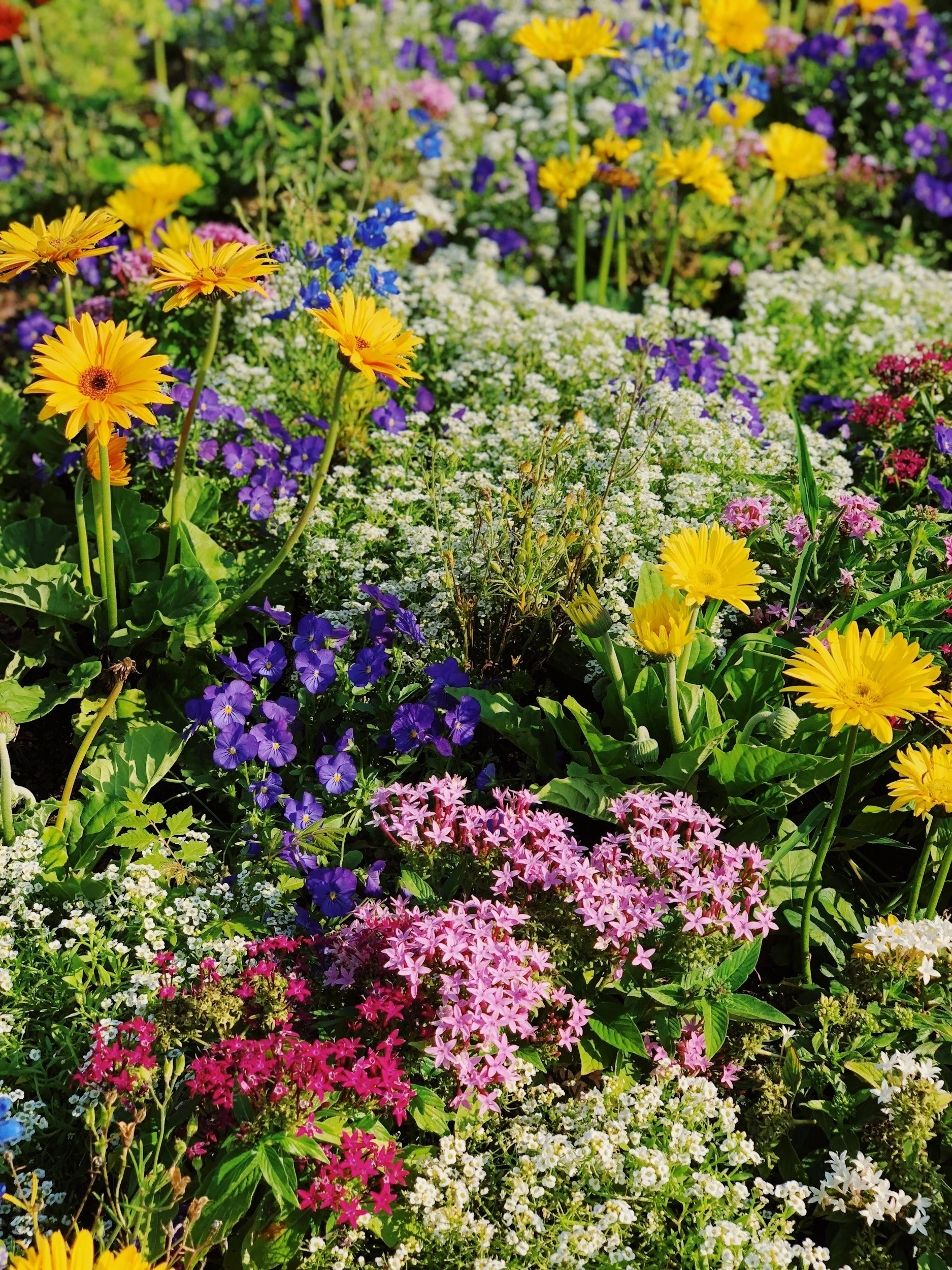
What if Monroe had a Garden?
What if?
What if Monroe had a beautiful public space where people could gather with family and friends, slow down for a while, and experience something inspiring together? What if our community had a destination that reflected the beauty, creativity, and potential already present here? What if a neglected space in the center of town could be transformed into something elegant, welcoming, and alive?
Those questions eventually became the foundation for what is now the Monroe Botanical Garden. But the inspiration for the garden did not come from a single moment. It emerged slowly over many years through visits to botanical gardens and public spaces that demonstrated what thoughtful design, horticulture, and community vision can create.
Like many people, I have always been drawn to spaces that make you feel something the moment you enter them. Places that are peaceful without being empty. Places that encourage curiosity and conversation. Places where people of all ages naturally want to linger a little longer. Some of those places became especially influential in shaping the early vision for the Monroe Botanical Garden.
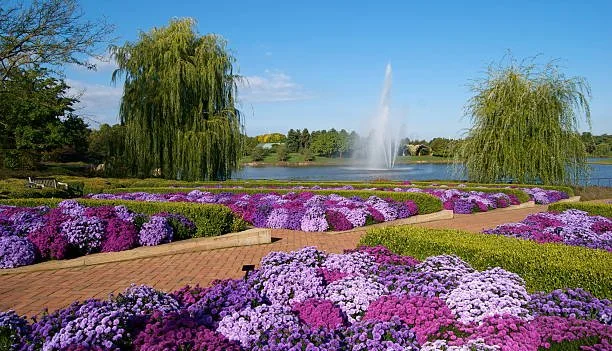
Chicago Botanic Garden
The stunning landscapes and immersive experiences of the Chicago Botanic Garden demonstrated how gardens can become true regional destinations. It is not simply a collection of plants. It is an experience. The pathways, water features, gathering spaces, educational areas, and seasonal changes all work together to create a place people return to again and again.
At the other end of the spectrum was the much smaller but deeply charming The Garden District at Sanger House Gardens in Milwaukee. That garden reinforced something equally important: a botanical garden does not need to be massive to be meaningful. Intimate spaces can be incredibly powerful when they are thoughtfully designed and deeply connected to the surrounding community.
Closer to home, Olbrich Botanical Gardens offered another layer of inspiration. Olbrich beautifully balances horticulture, accessibility, education, and public engagement. It is welcoming to serious gardeners, casual visitors, children, tourists, and longtime residents all at once. It manages to feel both refined and approachable.
And then there was the Frederik Meijer Gardens & Sculpture Park in Grand Rapids, Michigan. That space demonstrates the extraordinary impact that art, architecture, horticulture, and cultural programming can have when combined intentionally. It creates not only beauty, but energy. It becomes woven into the identity of the region itself.
After visiting places like these, it became increasingly difficult not to imagine what could someday be possible in Monroe. Because the truth is this:
Monroe is already an incredible place.
People who live here know it. Visitors often discover it quickly. Monroe has history, character, architecture, agriculture, small businesses, community pride, and a pace of life that many communities have lost. It is a place where relationships still matter and where people genuinely care about their community. But communities do not remain vibrant by accident. They require continual investment, creativity, stewardship, and vision. They require people who are willing to imagine what could exist here ten or twenty years from now and then begin building toward it.
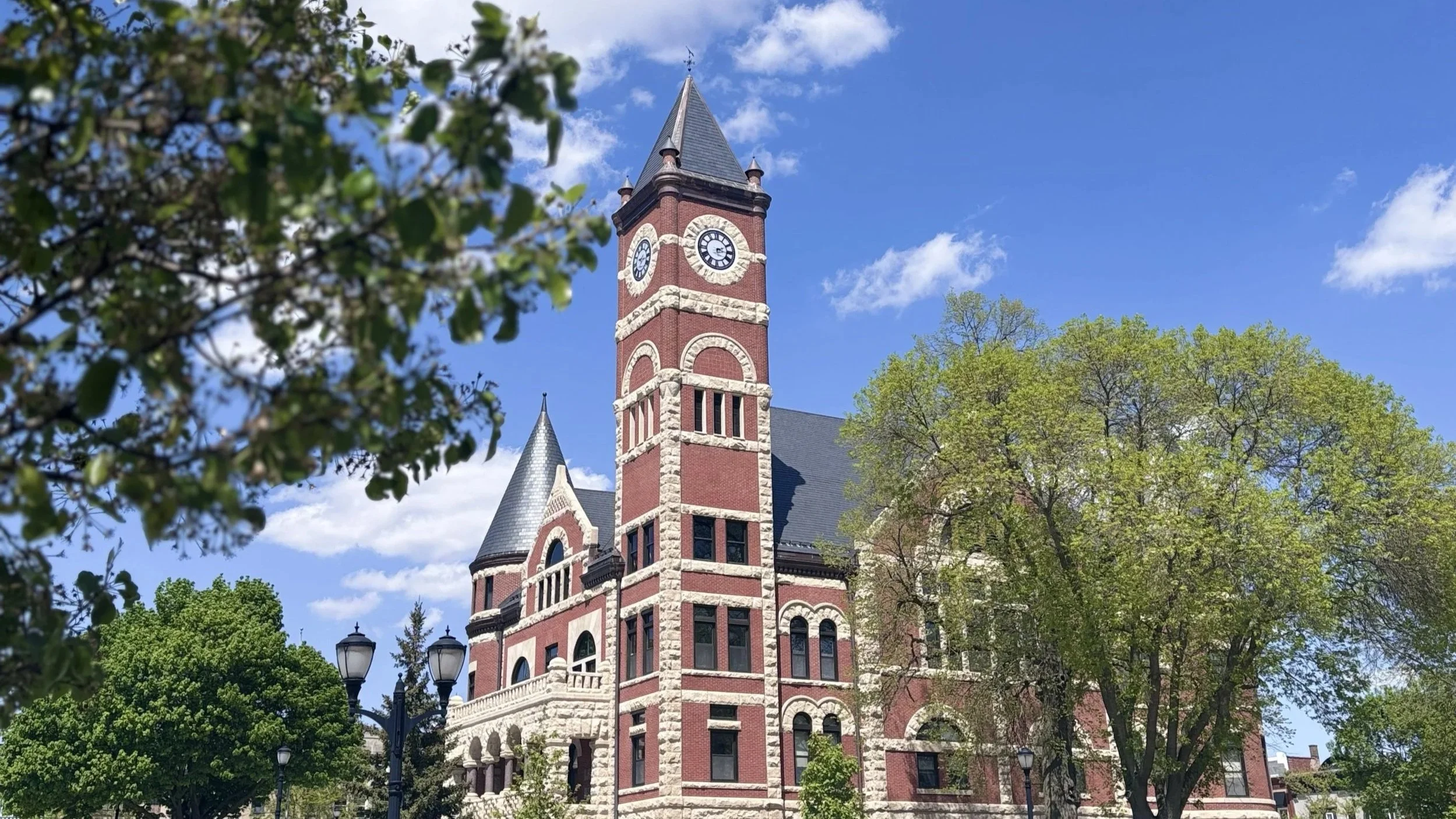
Historic Green County Courthouse
The Monroe Botanical Garden grew from the belief that our community deserves beautiful public spaces that enrich everyday life while also helping attract visitors and strengthen the local economy. We wanted to create a place where families could spend time together. A place where grandparents could walk with grandchildren. A place where children could experience nature in an interactive and engaging way. A place where someone could quietly drink coffee in the morning, attend an evening event with friends, or simply take a peaceful walk after a difficult day.
We also believed that Monroe would benefit from another compelling destination — something that complements the many strengths already present within the community. Tourism matters to small towns. Visitors support local restaurants, shops, hotels, and community events. They help create energy and momentum. But the most successful destinations are not artificial attractions. They are authentic places built with care and rooted in the identity of the community itself. That became an important guiding principle early on.
The Monroe Botanical Garden should feel like Monroe.
Not a copy of somewhere else.
Not a manufactured experience.
But a space deeply connected to this community and its people.
That philosophy also influenced one of the earliest major decisions: where the garden should be located. Rather than placing the project on the edge of town, we intentionally selected a central location that is walkable and bikeable for much of the city. We wanted the garden to feel integrated into everyday life rather than isolated from it. Public spaces become more meaningful when people can easily access them. When children can bike there. When neighbors can walk over after dinner. When downtown visitors can naturally include it as part of their experience.
Accessibility and connection mattered deeply to us. The selected site also carried another important opportunity. For many years, this particular area of the city has needed love and reinvestment. Like many communities, Monroe has spaces that have slowly lost energy over time. We saw the possibility not simply to build a garden, but to help transform a neglected area into something elegant, welcoming, and inspiring.
There is something incredibly powerful about reclaiming overlooked spaces and giving them new life.
Beauty matters.
Thoughtful environments affect how people feel about their community. They influence pride, optimism, investment, and connection. When people see care and intentionality reflected in public spaces, it changes the emotional experience of a city. The Monroe Botanical Garden is not just about plants. It is about creating an atmosphere. It is about cultivating connection between people, nature, art, learning, and community.
Like many projects, however, the vision remained mostly an idea for quite some time. Big ideas often wait for the right moment, the right collaborators, and the right momentum. For me, one of the people who helped move this dream from conversation into action was Cathy Hauck.
Cathy and I had discussed possibilities and ideas many times, but things truly began accelerating after learning about the opportunity to participate with Green County Leaders. That experience became a turning point.
The Green County Leaders program brought together thoughtful, motivated people who care deeply about the future of this community. It created the structure and accountability needed to begin transforming the concept into a real project. We presented the botanical garden idea to the group, and something remarkable happened.
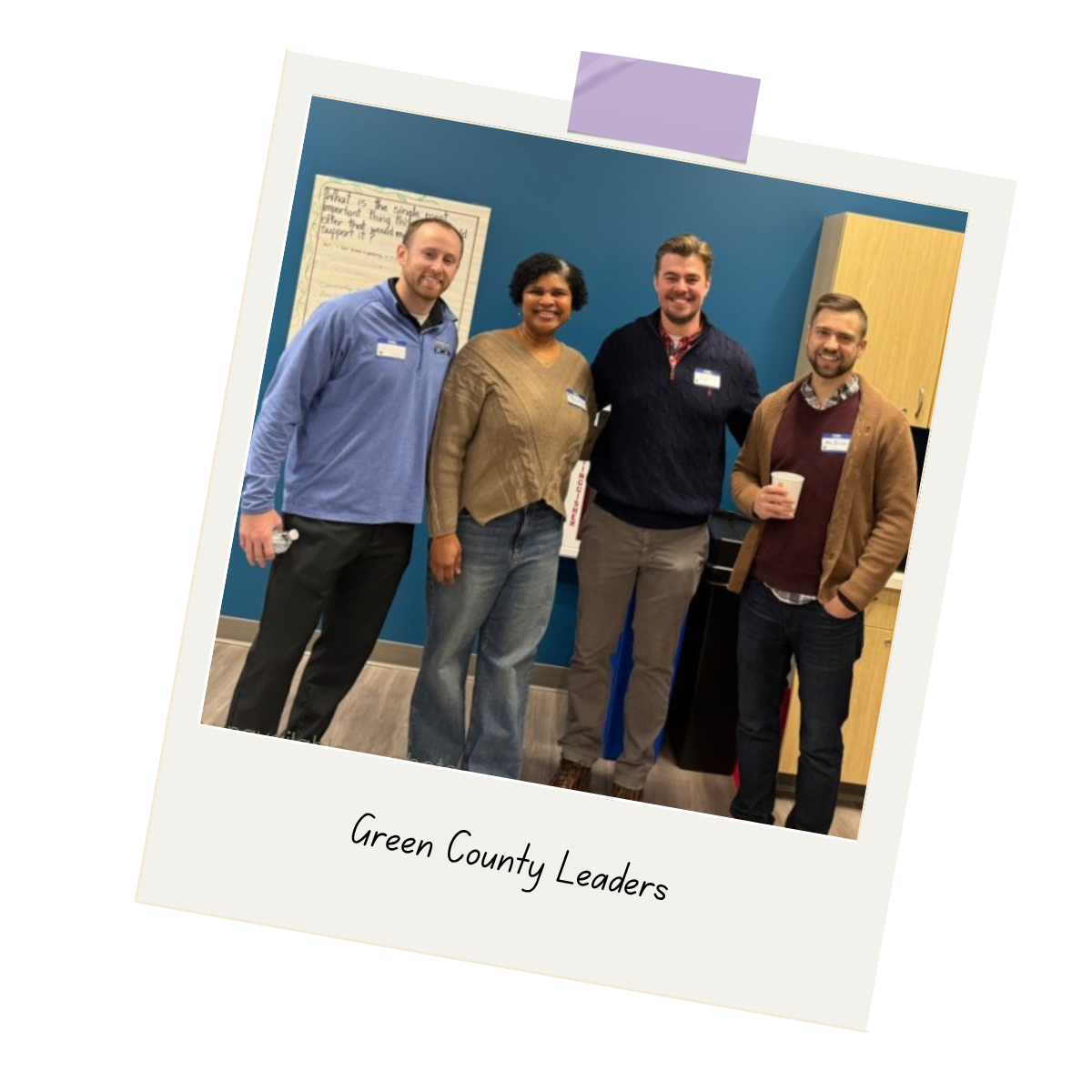
Green County Leaders
People connected with it.
Several participants chose to join the effort and help move the project forward. That early support was incredibly meaningful because community projects only succeed when others begin carrying the vision alongside you. From that point forward, momentum started building quickly.
The initial phase of the project focused on establishing the organizational foundation needed to support long-term success. We knew from the beginning that this could not simply be an informal community effort. If the project was going to become sustainable and impactful for decades to come, it needed proper governance, structure, planning, and accountability. One of the first major milestones was establishing the botanical garden as a nonprofit organization. That step created the legal and organizational framework necessary for fundraising, partnerships, grant opportunities, long-term stewardship, and public trust.
At the same time, we worked to build a Board of Directors with diverse strengths, perspectives, and areas of expertise. We wanted people who genuinely cared about the mission and who were willing to actively contribute their talents to helping shape the future of the garden. The board structure became intentionally collaborative, with different directors helping lead areas such as horticulture, fundraising, community outreach, volunteer coordination, marketing, infrastructure, and finance.
Another critical milestone involved identifying the right design partners. We understood early on that the physical design of the space would shape the entire experience of the garden for decades. We wanted professionals who understood not only landscape architecture and building design, but also the emotional experience of public spaces. This eventually led to partnerships with talented landscape designers and architects who understood the larger vision we were trying to create — something beautiful, flexible, welcoming, and deeply connected to the community.
Equally important was involving the public early in the process. One of the major milestones achieved during this initial phase was hosting a community meeting to gather public input. We wanted residents to help shape the direction of the project rather than simply presenting a finalized vision after decisions had already been made. The response reinforced something we had suspected from the beginning:
People are hungry for spaces that bring communities together.
Residents shared ideas about family activities, educational programming, tourism opportunities, public events, art installations, children’s spaces, wellness programming, gathering areas, native gardens, seasonal experiences, and year-round attractions. The conversations were energizing because they demonstrated how many people immediately understood the broader purpose of the project.
The Monroe Botanical Garden is not simply about creating something pretty to look at.
It is about creating a place where memories happen.
A place where children attend field trips. Where local artists showcase their work. Where families gather during holidays and community celebrations. Where volunteers work side-by-side building something meaningful together. Where visitors discover Monroe for the first time. Where residents rediscover it.
And perhaps most importantly, it is about creating something lasting.
One of the most inspiring aspects of community projects is that they often begin before anyone fully knows what they will eventually become. Early visions evolve. New ideas emerge. Partnerships grow. Momentum builds gradually over time.
The Monroe Botanical Garden is still early in that journey. But the foundational milestones that once existed only as ideas have now become real: A nonprofit organization has been established. A committed Board of Directors is in place. Design partnerships have been formed. Community engagement has begun.
The vision is moving forward.
There is still an enormous amount of work ahead. Projects like this require fundraising, planning, persistence, collaboration, and patience. They are built step-by-step over years, not weeks. But perhaps the most important step has already happened. The community has begun believing that it is possible. And that belief is where transformative projects always begin.
The Monroe Botanical Garden was inspired by extraordinary places elsewhere, but its purpose is deeply local. It exists because we believe Monroe deserves spaces that inspire people, strengthen community, support tourism, encourage connection, and create beauty in everyday life.
In many ways, the project is ultimately about stewardship. About choosing to invest in the future of a place we love. About believing that small communities deserve ambitious ideas too. And about creating something that future generations will hopefully enjoy for decades to come. That is how the vision began.
And this is only the beginning of the story.
